Month 01
Baseline Scores
Baseline indicator scores recorded across every monitored risk area.

Monitor meaningful risk indicators, identify emerging exposure and give decision-makers the context needed to act before risk escalates.
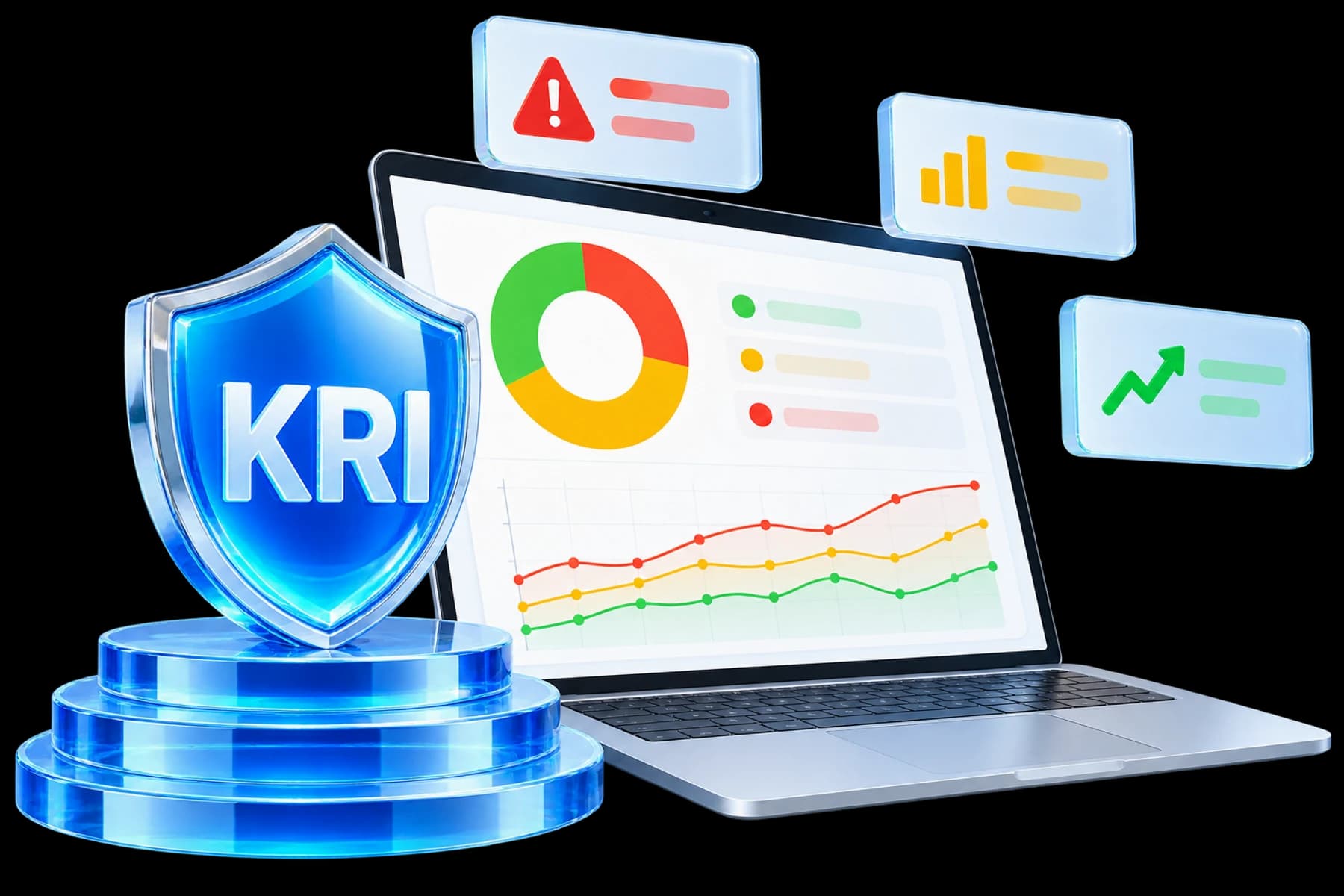
Request a DemoBring key risk indicators into one view to understand your overall security posture and measure the effectiveness of the security tools supporting it.
Live security and risk context mapping.
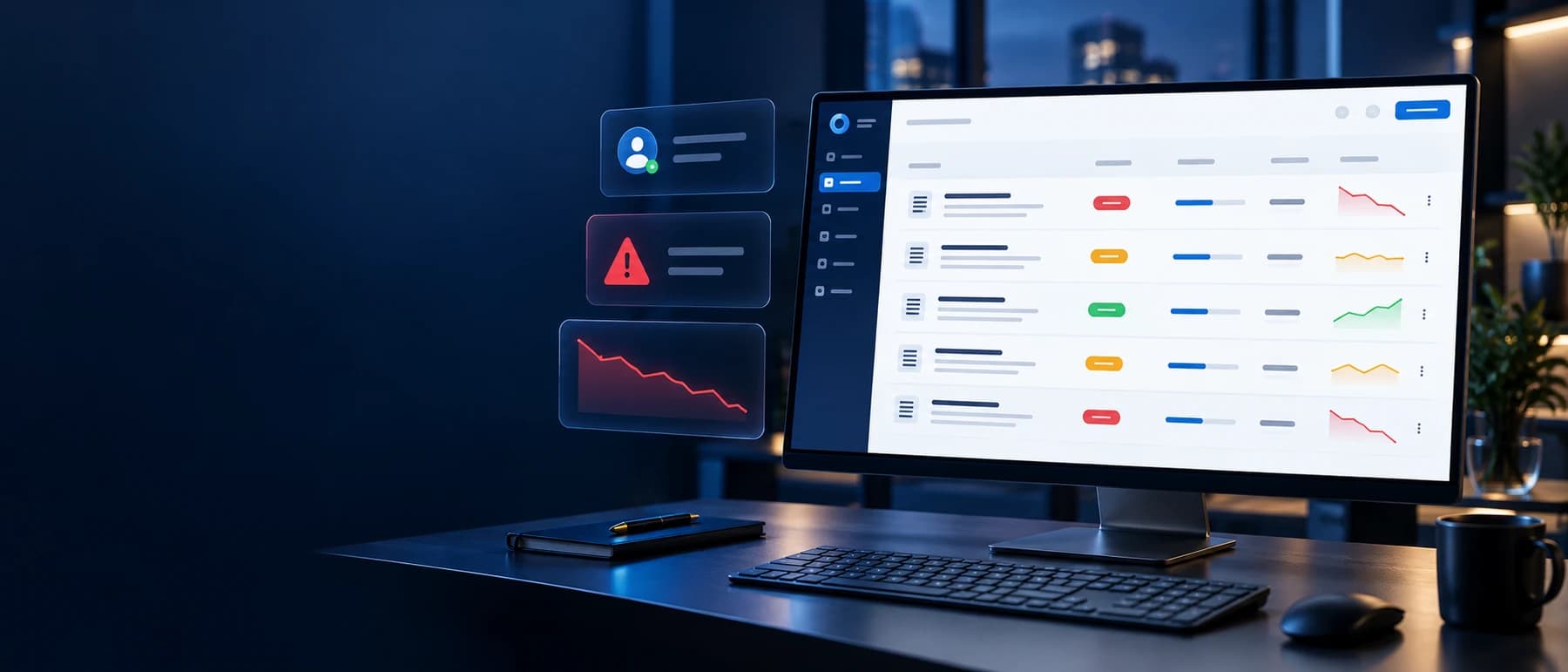
Indicators are only useful when someone is accountable for reviewing them. Route threshold breaches to the right owner and give reviewers a structured view of risk indicators across the organization, instead of isolated, disconnected metrics.
Track and compare KRI scores month by month to identify trends and changes in your risk posture.
Baseline indicator scores recorded across every monitored risk area.
Two indicators drift toward threshold, flagged for owner review.
Threshold breach confirmed; escalation opened with the risk owner.
Remediation holds and the indicator trends back within appetite.
Historical KRI scores give security teams a clearer view of whether risk indicators are moving in the right direction or require attention.
Track risk indicator scores over time
Use a pre-filled KRI library aligned with common security risks and standards, giving teams a practical starting point for KRI monitoring.
Choose from a pre-built KRI library mapped to security risks and frameworks.
Set thresholds, owners, and review cycles to match your environment.
Track indicator performance and get notified on deviations.
Every organization has different risk priorities. Define and customize KRIs based on your specific business and security requirements.
KRI monitoring helps turn individual risk metrics into a view of security posture, effectiveness, and changing risk trends.
Collect and track risk indicators
Convert metrics into meaningful scores
Identify changes and emerging risks
Focus on what needs action

KRI monitoring works alongside the broader Cytrusst risk environment, giving security and risk teams another layer of visibility into organizational risk.
Connect each indicator to its definition, owner and review threshold.
Use indicator changes to revisit the associated risk and response.
Bring threshold breaches into the control owner’s governance review.
Use changing indicators as context when reviewing business-impact scenarios.
A key risk indicator needs a definition, a threshold and an accountable owner. The trend explains whether exposure is improving; the threshold explains when action is due.
| Period | Overdue share | Threshold context | Status |
|---|---|---|---|
| January | 6% | Below 10% review threshold | Within threshold |
| February | 8% | Rising toward threshold | Watch closely |
| March | 14% | Threshold crossed — owner review | Needs escalation |
| April | 11% | Improving — still above threshold | Monitor progress |
Track the indicators that matter, understand how risk changes over time, and maintain a clearer view of your security posture with Cytrusst KRI.
Request a KRI DemoMeasure Risk. See the Trend. Know Where to Focus.